

Sussex County, Delaware
EcoVillage
A working aquaponics farm, renewable-energy eco-center, and community healing ground — rooted in 25 years of building sustainable systems and supporting the people who need them most.
Where Food, Healing, and Community Grow Together
Finding The Force is developing a commercially viable aquaponics farm and sustainable eco-center in Sussex County, Delaware. The project combines year-round food production, renewable-energy resilience, employment, practical education, and community programming within one integrated operating model.
This is not a concept. It is the next chapter of work that has been underway for more than two decades — building farms, demonstration systems, and healing environments for the communities that need them most.
What the Farm Will Produce
A 4,800-square-foot controlled-environment aquaponics facility operating year-round.
Lettuce & Leafy Greens
The primary revenue crop — harvested on a predictable schedule and delivered fresh to restaurants, institutions, and CSA members.
Herbs, Microgreens & Tomatoes
Specialty crops that diversify income and serve high-margin restaurant and direct-sale channels.
Locally Raised Fish
A secondary product and the biological engine of the aquaponics system — providing nutrients to the plants while developing a local market over time.
Solar-Backed Energy Resilience
A solar-and-battery microgrid protects critical pumps, aeration, controls, and living inventory during power interruptions.
Jobs & Workforce Pathways
Two full-time roles in year one, growing to six sustained full-time positions by year five — plus construction, training, and seasonal employment.
Education & Community Programming
Cooking demonstrations, nutrition classes, youth STEM, veteran gatherings, and nervous-system education — offered from the Outdoor Food, Education, and Community Pavilion.
Featured Article
Green Fire Times — New Mexico
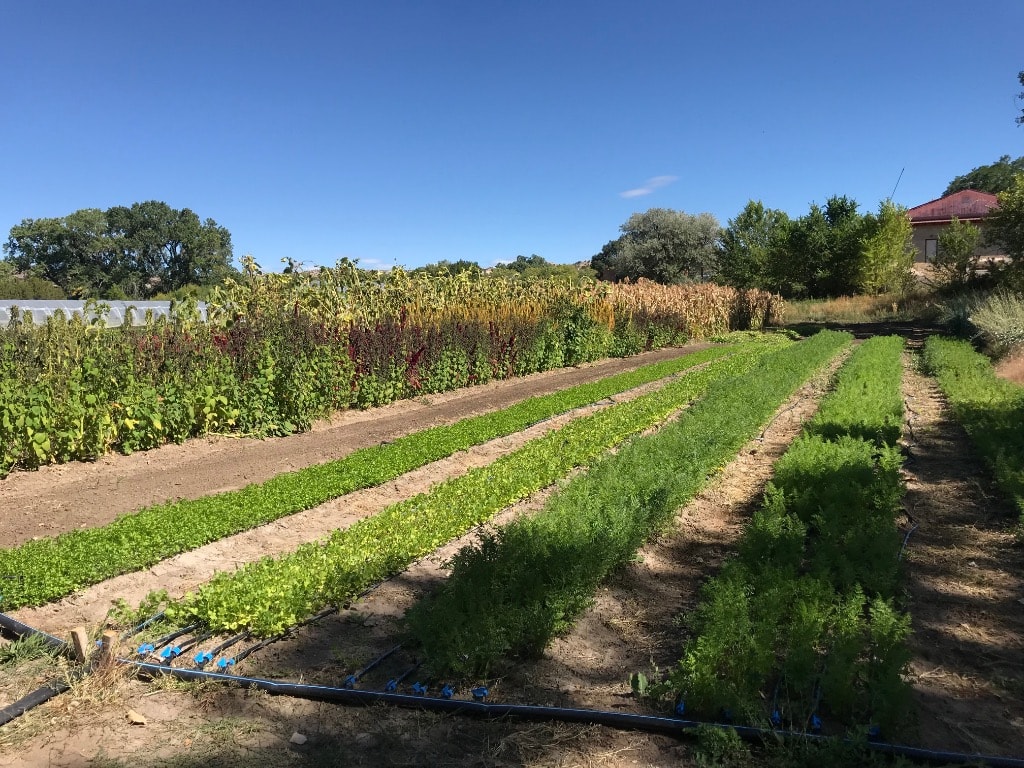
Dr. Courtni's work with traditional Native elders in New Mexico was featured in the Green Fire Times — a publication dedicated to sustainable living, Indigenous knowledge, and community resilience in the Southwest.
Green Fire Times · March 2020
25 Years Building Farms, Demonstration Systems & Community Healing Grounds
Long before the EcoVillage proposal, Dr. Courtni was in the field — building working farms and food demonstration systems in collaboration with traditional Native elders in New Mexico. This article documents that work: the land, the relationships, the knowledge systems, and the model of sustainable food production rooted in Indigenous practice.
Read the ArticleFive-Year Community Impact
The farm is designed to grow steadily — reaching operating profitability in year three and expanding its community reach every year.
Build & Commission
Construction, biological cycling, staff training, food-safety preparation, and first limited harvests. Two full-time roles established.
Production Ramp
Crop scheduling, delivery routes, and restaurant relationships refined using real operating data. Three full-time roles.
Operating Profitability
The farm reaches annual operating profitability. Four full-time roles. Community programming fully active.
Expanding Reach
Revenue grows through diversified channels. Five full-time roles. Intellectual property documentation underway.
Replicable Model
Six sustained full-time roles. The CNTK Sustainable Eco-Center Model documented and ready for replication by woman-owned, veteran-owned, and community-based partners.
25 Years of Building What Works
Dr. Courtni Hale, PhD — Founder & Executive Project Director
Dr. Courtni Hale has spent 25 years building farms, sustainable demonstration systems, and large-format art installations — many of them designed specifically for at-risk youth. That work was never theoretical. It was hands-on, community-embedded, and built to last.
For 20 years, she has worked primarily with combat veterans, people in recovery, and individuals living with PTSD — guiding holistic retreats that combine nature immersion, nervous-system education, agricultural participation, movement, and peer connection. She has seen, repeatedly, that sustainable healing requires more than a single intervention. It requires environment, rhythm, relationship, and daily practice.
Her doctoral research formalized what she had observed in the field. The dissertation identified four interconnected aspects of successful healing and transformation — the same four Compass Keys that anchor Finding The Force — and demonstrated the path the human nervous system needs to unwind and reintegrate.
The Journey Home
A doctoral framework for healing — and the heart of the eco-center's veteran programming.
Dr. Hale's doctoral dissertation identified four interconnected steps the human nervous system must move through to genuinely heal, reintegrate, and sustain change. These are not stages to rush. They are the architecture of lasting transformation.
Regulation
The nervous system must first find safety. Before any meaningful processing can occur, the body needs to come out of chronic stress activation — through rhythm, nature, breath, movement, and consistent environment.
Orientation
Once regulated, a person can begin to understand where they are, how they arrived there, and which patterns continue shaping their experience. Orientation is the foundation of informed choice.
Processing
With orientation established, recurring beliefs, experiences, and emotional patterns can be examined and worked through — not suppressed or bypassed, but genuinely metabolized.
Integration
Insight becomes sustainable only when it is embedded in daily behavior — nutrition, movement, relationships, environment, community participation, and repeatable micro-habits that reinforce the change.
The farm provides the ideal environment for this process. Agricultural work requires rhythm, responsibility, biological awareness, physical participation, patience, and contribution to something living. These are not incidental benefits. They are the conditions the nervous system needs.
Proof of Concept
See the System in Action
This video demonstrates the aquaponics model that forms the productive core of the eco-center — a living, integrated system connecting fish, plants, water, and energy.
Facility Design
Aquaponics Center — Architectural Drawings
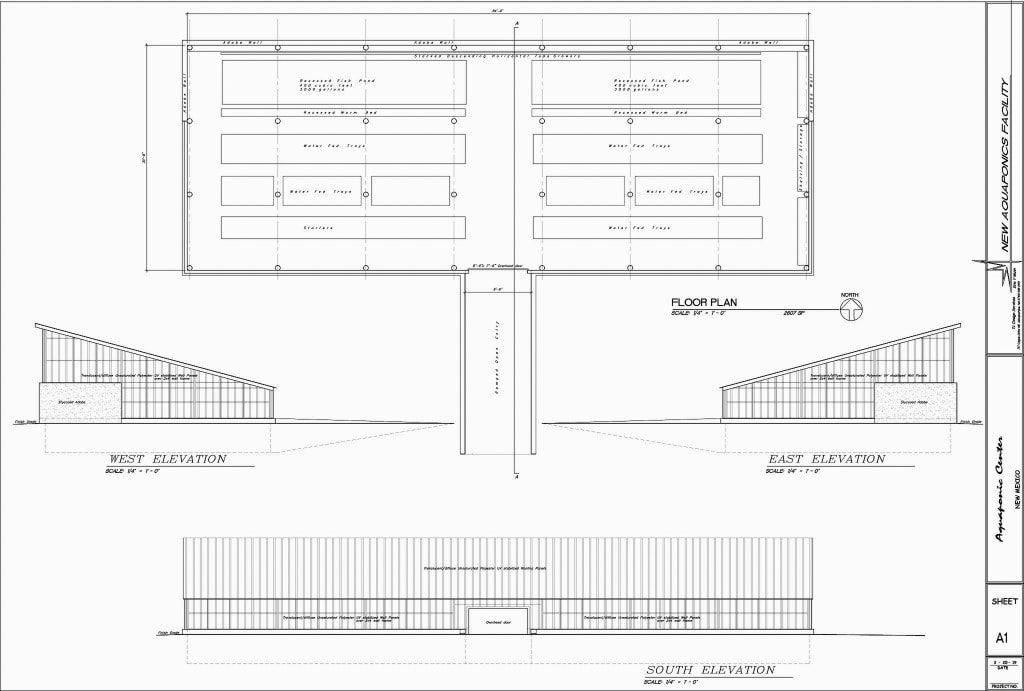
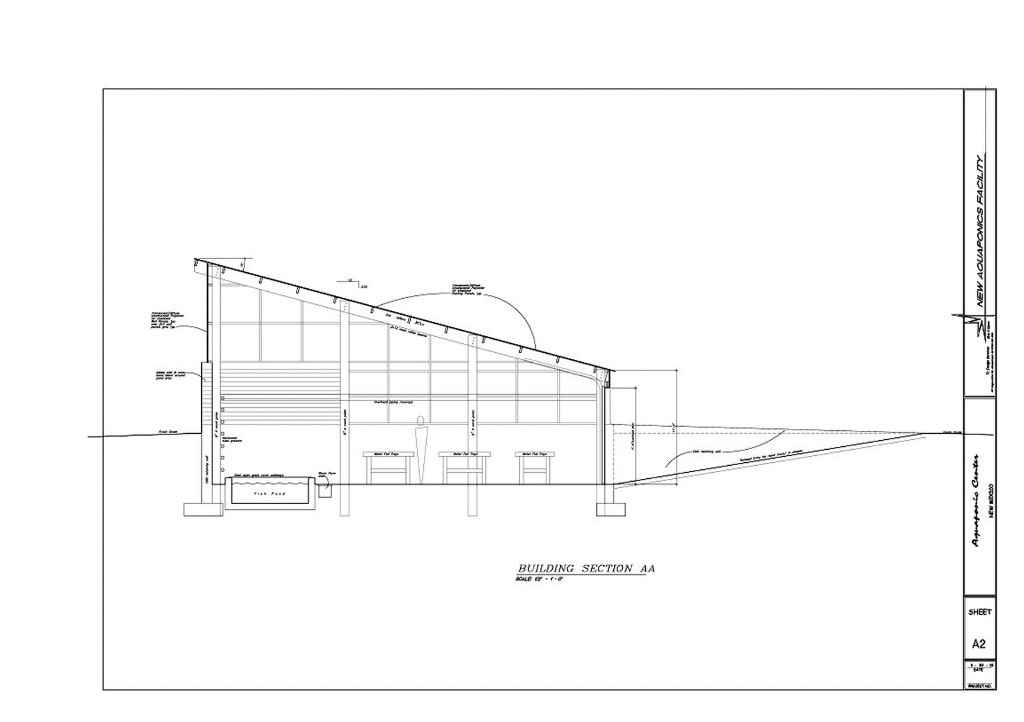
Engineered drawings for the New Aquaponics Facility — a 2,007 SF controlled-environment center featuring recessed fish ponds, worm beds, water fed trays, and a passive solar design with full west, east, and south elevations.
The Outdoor Food, Education & Community Pavilion
The pavilion is the civic heart of the eco-center. It provides a dedicated, welcoming space for cooking demonstrations, nutrition education, agricultural classes, youth STEM activities, veteran gatherings, movement and nervous-system programs, music, storytelling, and community meals.
An adobe-inspired fire feature creates a natural center for food preparation and gathering. The pavilion converts the farm from an isolated production facility into a visible community resource — one that helps people practice healthier and more sustainable ways of living, not simply purchase vegetables.
Who This Serves
Combat Veterans & Military Families
Paid employment, agricultural training, peer gatherings, and a future nature-based reintegration program designed around the Journey Home framework.
At-Risk Youth
A living STEM classroom where students observe aquaponics, water chemistry, renewable energy, plant biology, and food systems as one interconnected whole.
People in Recovery
A structured, nature-embedded environment that supports regulation, routine, purposeful work, and community belonging — the conditions sustainable recovery requires.
Women in Agriculture & Technology
Visible leadership, workforce pathways, and a replicable model that other women can use to establish their own sustainable food and community enterprises.
Delaware Restaurants & Institutions
Year-round, locally grown lettuce, greens, herbs, and tomatoes — delivered fresh, with full traceability and a direct relationship with the grower.
The Broader Community
Cooking classes, nutrition education, community meals, and sponsored produce access — designed so that healthy food and practical health education are accessible, not aspirational.
This Work Is Ready to Grow
The eco-center model connects sustainable agriculture with the human practices necessary for sustainable success. If you are a partner, funder, restaurant, veteran organization, school, or community member who wants to be part of what is being built in Sussex County — reach out.
Get in Touch